Gallipoli Diaries VIII
The Turkish Defense

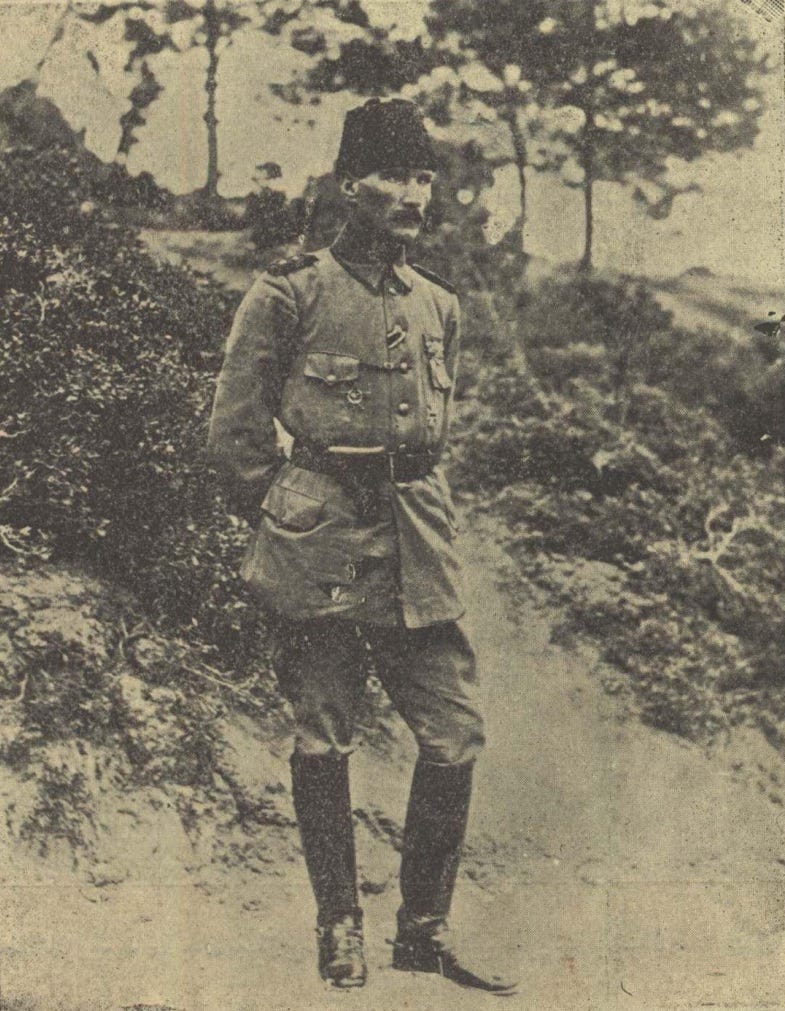
The Turks were outnumbered, outgunned, technologically outmatched, and lacked the initiative during the amphibious phase of the Gallipoli. So how did they win?
Too many books on the campaign have focused entirely on the British side. Most historians writing in English search for what the British could have done to succeed or, like Hart, simply declare it impossible. This is, perhaps not unfairly, an assumption that the British lost the campaign on their own.
But a cursory review of sources on the Ottoman side of the equation makes it pretty clear that the Turks simply won. There are a number of excellent modern works that have used Turkish sources in addition to the English and German accounts, but the essential one for most readers is Gallipoli: The Ottoman Campaign by Edward J. Erickson.
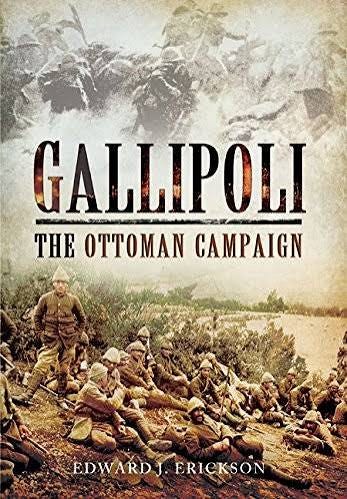
Erickson exhaustively examined the records of the Ottoman forces and, in my opinion, decisively contradicts one pernicious myth about the battle: that it was German leadership that made the Turkish defense effective. To be sure, the German assistance in both command and technical expertise was a critical factor but not a dominant one. General Lyman von Sanders was invested in command of the defense and he was no slouch. But Erickson’s deep dive into the Turkish sources makes it pretty clear that they likely would have succeeded anyway for a few reasons.
First, the plan developed for the defense of the peninsula pre-dated German involvement and Sanders’ arrival. When he assumed command, he did some allocation of forces between different areas. But, the general outlines of the plan were developed by Ottoman Army officers before the war even began and many of those same officers, like Mustafa Kemal, ended up commanding units in the execution. They knew the plan and they knew the ground intimately.
Second, the Ottoman Army had well-developed doctrine prior to German involvement. Previous historians have identified the frequent shifting of Ottoman units between commanders regardless of parent command as a chaotic and ad hoc response to the landings simply because such disaggregation and reaggregation of units was not preferred by western troops. But in fact this was a deliberate method present in Ottoman Army doctrine and training, and it was routine for the troops themselves. This flexibility compensated for the lack of forces and firepower and the necessity to split troops between the peninsula itself and the Asiatic shore. It proved a match for the inherent amphibious flexibility inherent of the British, essentially cancelling it out. For example, it resulted at one point in Mustafa Kemal, then a lieutenant colonel, in command of an assortment of units that equated a corps. In the British system, a lieutenant general would be necessary to command that much combat power. But the Ottoman system recognized that Lieutenant Colonel Kemal was best positioned to defend a front and gave him the resources necessary to do so without concern for his rank. Additionally, much has been made of Liman von Sanders’ decision to build flexibility into the plan through his effective use of reserves. This is true, but it also reinforced an existing institutional flexibility in Ottoman doctrine.
Third, the Ottoman command and control system was an extremely effective information processing system. At every point in the battle, the Turkish commanders are extremely well-informed in near real time about what is occurring. There are only two points where this command system fails to identify key British movements. The first is during the initial landing phase. The Turks know immediately that landings are occurring (indeed they had been expecting them for two months) but cannot initially tell whether the Gallipoli landings or the French landing at Kum Kale on the Asiatic shore are the main effort. Second, they did not identify the final withdrawals in time to take advantage of them. Both of these failures are the result of intentional British deception efforts, not a failure in their system. Conversely, during many critical moments senior British commanders are not even on the ground but out of contact on ships at sea or even on the nearby island of Lemnos. There is no consistent plan for subordinate commanders present on the ground to make decisions in their absence or even notify them of events. During the initial Ottoman counter-attack at ANZAC Cove, led by Mustafa Kemal, the British commander Sir Ian Hamilton is asleep on the HMS Queen Elizabeth and his staff is still on Lemnos. The Royal Navy had to step in and wake him up.
Lastly, I think Erickson’s description of the role of Mustafa Kemal is the most accurate possible. It is a difficult factor because leadership is always intangible and Mustafa Kemal’s later career as Ataturk means it is tempting to place too much weight on his presence at the campaign. Indeed, I did so myself in On Tactics, using his appointment as overall commander at the ANZAC front as an example of the moral effect of leadership.
Erickson does a good job of placing Kemal in the proper context without going too far with it, but I remain convinced that Kemal’s leadership is also a critical factor in the Ottoman success. Lyman von Sanders is well-informed on events throughout the campaign and has a good sense of its ebb and flow thanks to the aforementioned Ottoman command and control system, but during one critical moment he bypassed the chain of command to talk to Kemal personally. The two men had known each other for some time, Kemal spoke fluent German, and it seems that this relationship allowed Sanders to confirm his senses. This was the point where Sanders decided to place the complete control of the ANZAC front in Kemal’s hands. It’s impossible over a hundred years later to definitively confirm the decisiveness of these intangible factors but given the known facts it also cannot be dismissed.
Looking at the defense, I could not help but make an admittedly shallow comparison to Taiwan. Lyle Goldstein has found that the People’s Liberation Army studies past amphibious warfare campaigns to inform Taiwan, including Gallipoli. He describes that they view Gallipoli as a cautionary tale demonstrating a poorly planned offensive and that they instead heavily focus on Normandy instead.
This, I think, is a mistake. There are no comparable beaches on Taiwan that make Normandy an apt comparison. In that case, the Allies had plentiful excellent beaches available to choose from and which could subsequently support a massive logistics effort. At both Gallipoli and Taiwan, the amphibious force must choose between a limited set of poor, easily defended beaches and seizing just one is insufficient for a follow-on expeditionary campaign. That being said, the lessons the PLA seems to have learned from Gallipoli are appropriate.
But the bigger lesson here is for Taiwan. Magazines and blogs are full of recommendations about what kind of defense Taiwan should employ if China launches an invasion. Here’s a recent example. But, judging by Gallipoli, they shouldn’t choose a specific defense at all. Instead, they should build a defensive system that maximizes flexibility and matches it with a command-and-control system that facilitates situational awareness and dynamic decision-making. Once the PLA commits to a campaign, they begin to lose initiative: they are forced into a few predictable axes of advance and must seize a port in time to sustain their forces on the island. Building a defense around of flexibility, instead of committing to one form of defense, preserves Taiwanese initiative and maximizes the friction the PLA will have to overcome. Once the Turks identified which beaches were the British main effort, their flexible doctrine and command system enabled them to turn those beachheads into prisons. The same can be done to the PLA no matter how they eventually decide to attack Taiwan. The beaches and ports are bottlenecks that an adroit defense can exploit.
There’s another lesson here for the U.S., which remains focused on denying the ability of the PLA to gain beachheads at all. Once the British gained beachheads at Hellas and ANZAC Cove, they had to support them from the sea. This placed Hamilton in a dilemma given the limited sustainment input that each beachhead could support. He could focus on keeping them well-supplied or he could push reinforcements (which only made the sustainment requirements higher). The Turks initially tried to drive the British back into the sea but eventually settled on simply keeping them bottled up. That made Hamilton’s dilemma worse, not better. This wasn’t a problem at Normandy given the amount of space available for follow-on sustainment forces, but it was Gallipoli and would be in Taiwan.
Most American observers believe that if the PLA establishes a beachhead or two, the game is up. But given the geographic difficulties they would face, establishing beachheads is the easy part. Breaking out of them would be the hard part. A Taiwanese defense that successfully contains beachheads places the PLA in the same kind of dilemma that Hamilton was in: keep the beachheads supplied (PLA troops will arrive with roughly four hours worth of ammo and two days worth of food and water) or reinforce them and make your sustainment problem even more difficult with more troops to sustain. Hamilton tried to get out of this dilemma by an additional landing at Suvla Bay, but that also became just another static beachhead that strained his logistics even more. Time is always on the side of the defense and beachheads that never reach a breakout phase just become liabilities for the offense.
My next post is my final planned post on Gallipoli itself focusing on the British amphibious withdrawal. After that I’ll write a post about the only British amphibious operation in Europe, the Zeebrugge Raid. At that point, the series will end and I will actually, finally, write the dissertation chapter.
I'm starting to shift to an expectation that an actual invasion won't be the primary reunification tactic. After watching recent global events in Europe and the Middle East I'm starting to think the Chinese will instead opt for a blockade of Taiwan. If they can strangle RoC (and bring economic crises to the rest of the world) they can simply sue for a political settlement in their favor - something like Hong Kong. It will also give them the flexibility to respond to any American intervention short of war with the US while also giving them clarity if there will even be an American response other than a strongly worded letter at the UN. PLAN can certainly control shipping around the island, so it's just a matter of whether the PLAAF can keep air traffic at or near zero. Then the clock starts running...